
Managing Logistics During a Biohazard Crisis
While the immediate safety of individuals is always the first priority during a property emergency, the logistical response that follows dictates how smoothly a property can recover. For landlords, HOA boards, and commercial property managers in Round Rock, having a concrete, property-level strategy is essential. A trauma event, unattended death, or severe sewage backup demands rapid decision-making to secure the building and coordinate professional intervention.
Effective property-level emergency cleanup strategies focus on immediate area isolation, controlling building access, identifying the primary decision-maker, and coordinating discreet vendor entry. By establishing these logistical protocols before an incident occurs, property managers can prevent cross-contamination and expedite the professional remediation process.
This article focuses specifically on the administrative and structural strategies required to manage a biohazard incident, ensuring that the remediation team can execute their work efficiently while you protect the rest of your facility.
Immediate Isolation and Access Control
The moment an incident is discovered, the primary goal is containment. Biological contaminants are easily tracked on shoes or spread through HVAC systems. Property managers must instantly isolate the affected zone.
- Lock Down the Area: If the incident occurred in a specific apartment unit or a commercial restroom, lock the doors immediately. Use temporary signage if necessary, but keep the language neutral (e.g., "Temporarily Closed for Maintenance") to avoid panic.
- Control HVAC Zones: If your building features zoned heating and cooling, shut off the air supply to the affected sector to prevent decomposition odors or airborne pathogens from circulating to clean areas.
- Secure Access Routes: Determine exactly how law enforcement, the medical examiner, and the remediation team will enter and exit. Designate a specific service elevator or rear entrance to keep the main lobby clear of emergency personnel and waste transport.
Identifying the Decision-Maker
In the chaos of an emergency, conflicting instructions can delay critical cleanup efforts. It is vital to identify a single, authorized decision-maker—whether that is the property owner, the facility manager, or an appointed estate representative. This person will be responsible for signing the work authorization, providing the remediation team with keys or access codes, and communicating with the insurance adjuster.
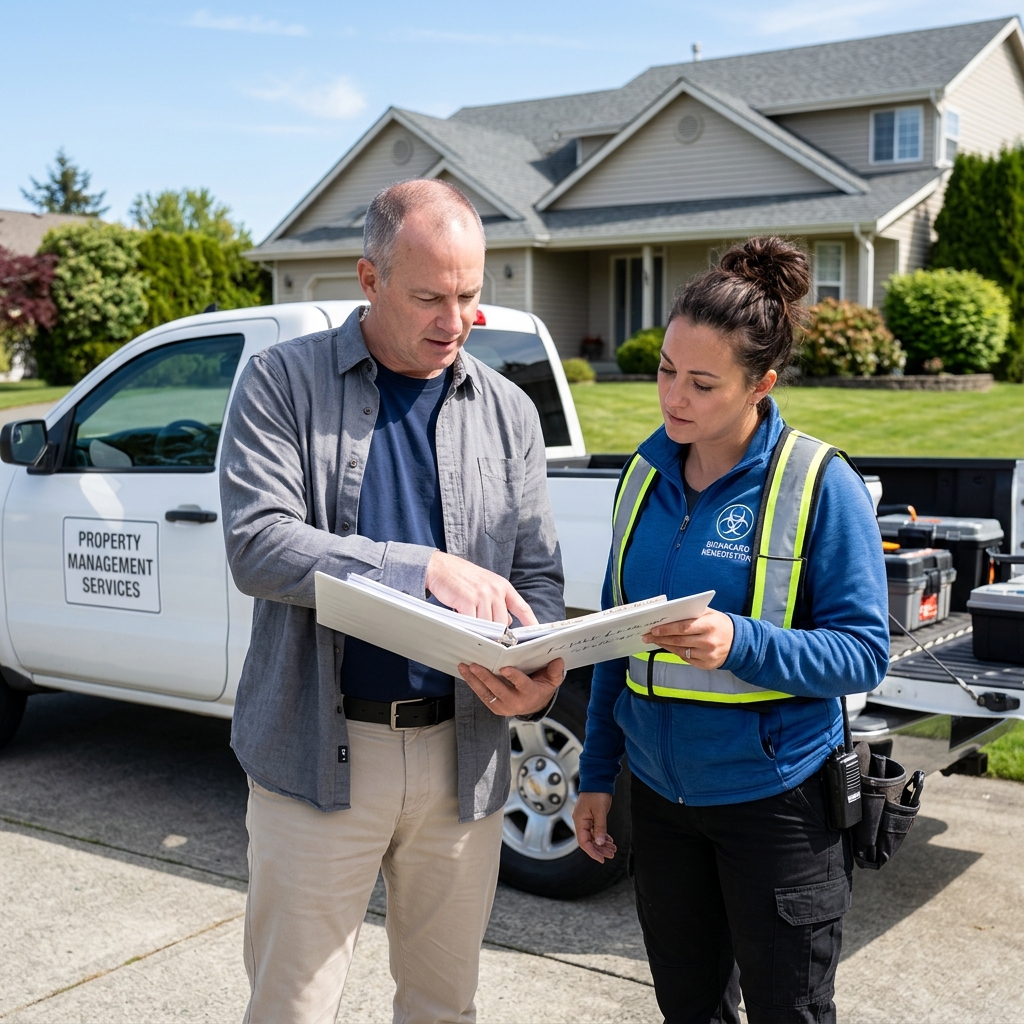
Keep a physical "Emergency Vendor Binder" at your front desk or management office that includes the 24/7 contact information for your trusted biohazard remediation company, plumbing contractor, and insurance agent.
Coordinating with Remediation Professionals
Once authorities have released the scene, your pre-selected vendor should arrive. Professional biohazard cleaning near Round Rock requires seamless coordination between the cleanup team and the property manager.
During the initial walk-through, the decision-maker should discuss staging areas for the remediation equipment and determine where the team can safely park their discreet service vehicles. If the incident involves severe contamination that requires the removal of flooring or drywall, the property manager must also begin planning the subsequent restoration or "build-back" phase once the biohazard team clears the space.
Tenant Communication and Post-Cleanup Review
Communication is a delicate balance. Tenants and employees have a right to know if their safety is impacted, but privacy laws and human decency require discretion regarding the specifics of a trauma or death. Provide brief, factual updates assuring them that a professional, certified team is handling a "property emergency" and that all safety protocols are being followed.
After the remediation is complete and you have received the final documentation and photographs from the cleanup crew, conduct a post-incident review with your management team. Assess what logistical steps worked well and update your emergency action plan accordingly. Preparing for the worst ensures that if disaster strikes again, your property and your people are protected.