Protecting Your Business and Your People
A biohazard incident in a commercial environment—whether a severe workplace injury, a sewage backup in a retail restroom, or a trauma event at a hotel—carries immense risks. Beyond the immediate physical danger of bloodborne pathogens, business owners face severe liability, OSHA compliance issues, and the threat of public relations damage. Handling these situations correctly is critical for business continuity.
Commercial biohazard remediation requires immediate isolation of the affected area, preventing untrained employees from attempting cleanup, and hiring certified professionals. Best practices include utilizing after-hours remediation, ensuring OSHA-aware safety protocols, and securing detailed documentation to protect the business from liability and health code violations.
Many managers mistakenly assume that their standard janitorial staff can handle a blood spill or sewage issue. This is a dangerous misconception that can lead to severe fines and health crises.
The Danger of Untrained Employee Cleanup
OSHA regulations are clear: unless an employee is specifically trained, vaccinated (e.g., Hepatitis B), and equipped with proper Personal Protective Equipment (PPE) to handle bloodborne pathogens, they cannot legally or safely be asked to clean up biological matter. Handing a mop and bleach to a retail worker after an injury is a direct violation of workplace safety standards.
Furthermore, standard commercial cleaning supplies do not eradicate biological pathogens effectively. Our Central Texas remediation specialists use hospital-grade disinfectants and follow strict cross-contamination prevention protocols to ensure the workplace is genuinely safe for reopening.
Minimizing Disruption and Protecting Privacy
For restaurants, medical offices, and retail stores near bustling corridors like University Boulevard or Louis Henna Boulevard, shutting down operations for days is financially devastating. However, remaining open while a hazard exists is worse. Professional remediation teams balance safety with speed.
Develop a written biohazard emergency action plan for your managers. It should explicitly state that staff are NOT to clean blood or bodily fluids, list emergency contact numbers, and detail how to lock down the affected area.
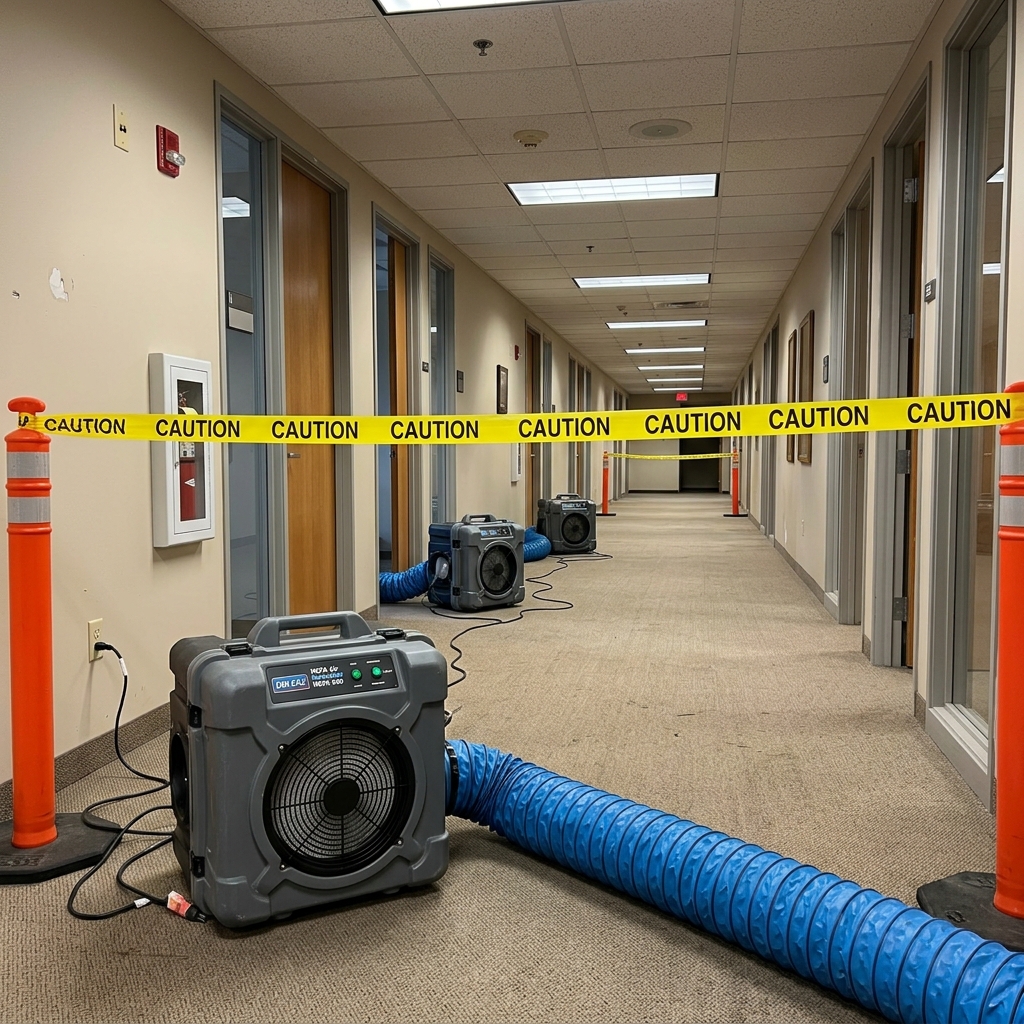
We routinely schedule commercial cleanups after hours or during periods of low foot traffic. Our discreet approach—using unmarked vehicles and covered waste bins—ensures that customers are not alarmed. If an incident happens during business hours, we establish immediate, opaque containment barriers so the rest of the facility can remain operational if it is safe to do so.
Liability, Waste, and Documentation
Disposing of commercial biohazardous waste in a standard dumpster is illegal and highly dangerous. Businesses can face massive fines for improper disposal. Professional cleanup support guarantees that all infectious waste, sharps, and contaminated materials are transported and destroyed according to state regulations.
Finally, documentation protects the business. We provide detailed reports outlining the scope of work, the specific sanitization methods used, and photographic evidence that the hazard was neutralized. This documentation is vital for workers' compensation claims, commercial insurance adjusters, and demonstrating compliance with local health departments.